Open Shelves or Cabinets with Doors? How to Choose Your Storage
Some things belong within easy reach; others can sit behind a door. Compare open and closed storage around your belongings, daily routines, and cleaning preferences.
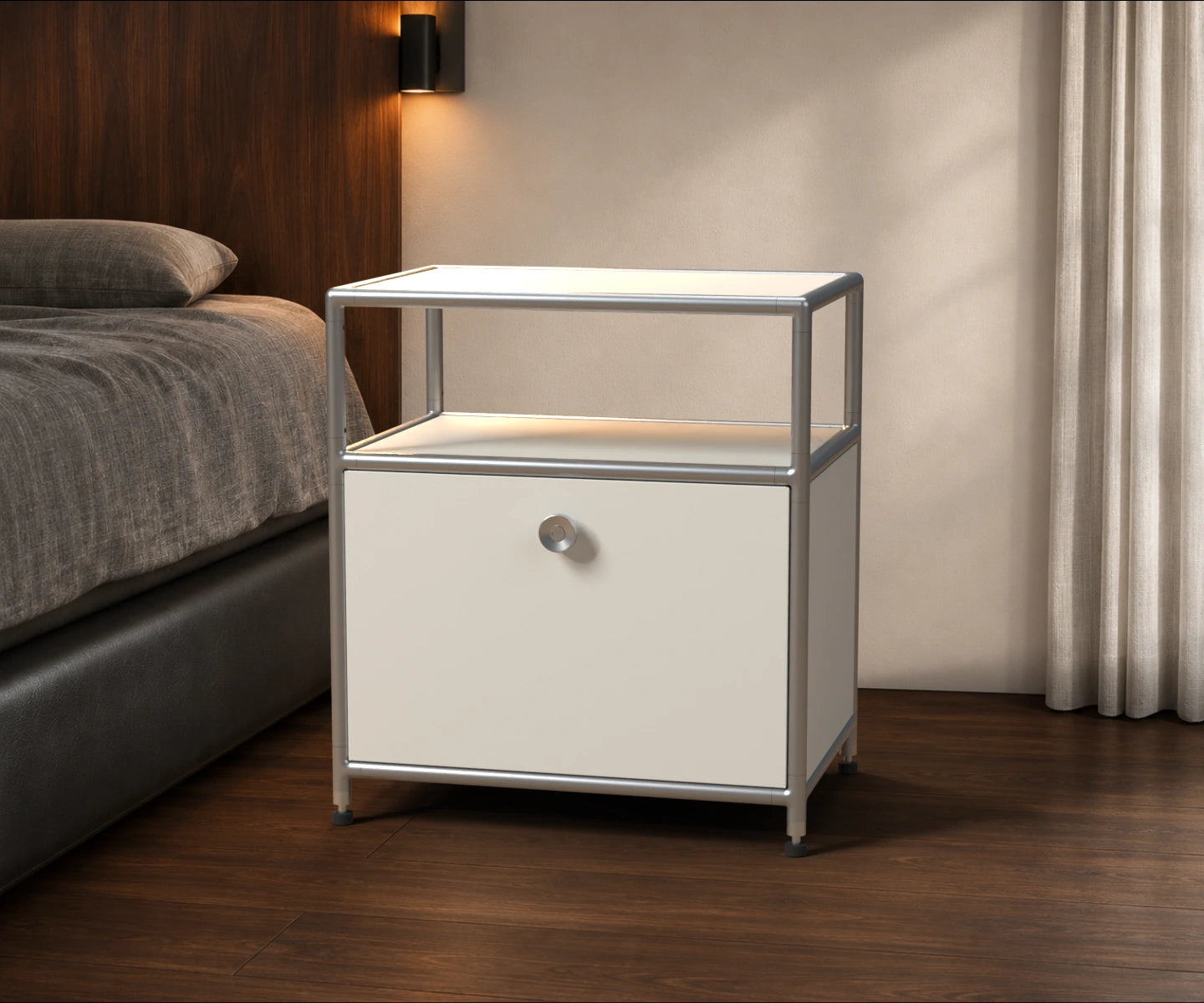
Cover image: AI-generated scene illustration.
Choose between open shelves and cabinets with doors by considering how often you use your belongings, what you want to see, and how you prefer to organize and clean. Open shelves keep items visible and directly accessible. Cabinets with doors keep contents out of sight. A combination can work well when you need both.
A book you’re reading, the cups you use every morning, charging cables, and a few small things you’re keeping for later. They share a home, but they may need different places within it.
At Foundation Living, we like storage to make room for those differences. You can keep favorite objects in view and put loose items behind a door. Start with how you take things out and put them back, then choose a layout around those habits.
1. What belongs on open shelves?
Open shelves suit belongings you use often, want to see, or enjoy displaying, provided the shelf dimensions and position make them easy to reach.
Beside the bed, an open shelf might hold your current book. In the dining room, it could be a place for a serving tray. In the living room, it might keep records or a collection in view.
Skipping the step of opening a door can make putting things away easier. The shelf’s position still matters.
If everyday cups sit too low, you may need to bend down each time. If books are packed tightly, taking one out may disturb the others. Try the motions of picking something up and putting it back, and notice whether anything needs to move first.
Check the clear opening as well as the shelf space. An item needs room to pass through the opening, with enough space for your hand to lift it out.

2. What belongs in cabinets with doors?
Cabinets with doors suit belongings you prefer to keep out of view, especially loose items, mixed packaging, and supplies you want to group together.
Charging accessories, extra napkins, and different packages of tea can each have a place. Closing the door gives the cabinet a more consistent appearance without requiring its contents to be arranged for display.
Inside, the layout should still make things easy to find. Group items by purpose or frequency of use, and keep everyday belongings within easy reach.
If you need to remove several things to reach one item at the back, consider changing the arrangement or shelf position, where adjustment is available. A storage bin can help collect small items; check its fit against the cabinet’s usable interior dimensions first.
Also check the door’s opening mechanism and required clearance. Near a bed, dining table, or corner, make sure you can open it and position yourself comfortably to reach inside.
Group belongings by purpose
Generic organization concept • not an opening demonstration
- Tea and drink supplies
- Napkins and spare items
- Charging accessories
- Keep everyday items reachable
3. How do cleaning and dust compare?
Open shelves leave their contents and surfaces exposed to the room. Cabinet doors can reduce some direct dust exposure, but protection depends on the cabinet’s construction, gaps, and surroundings.
If you want to display a collection, think about the cleaning routine, too. How many objects would you need to move? Can you wipe between them? Is that a task you’re comfortable doing regularly?
A few objects that are easy to lift may make an open shelf straightforward to clean. Many small pieces with detailed shapes can take more time.
Cabinets with doors also need cleaning, including their doors, handles, and interior shelves. Follow the product’s care instructions for its materials and finishes.
A door alone doesn’t establish that a cabinet is sealed or moisture-resistant. Belongings with particular storage requirements need a separate check against those conditions.
4. When does a combination of open and closed storage make sense?
Consider a combined layout when you have some things you want within direct reach and others you prefer to keep out of sight.
Different parts of the same cabinet can do different jobs.
An open shelf might hold the books you’re reading, while supplies sit behind a door. A frequently used tray can stay accessible, with smaller items grouped inside. You can assign the spaces around your habits; an open shelf doesn’t have to be used for display.
Notice whether the open section is at the top or bottom.
An upper open section may be more visible. A lower section needs to be considered alongside the cabinet’s overall height and how you’ll reach into it. Try a similar shelf height at home if you can.
The balance of open and closed space matters, too. If you have only a few things you want to display, you might prefer more enclosed storage. If you regularly use a larger collection of books, records, or objects, check whether the open sections offer the space and access you need.
Compare two storage layouts
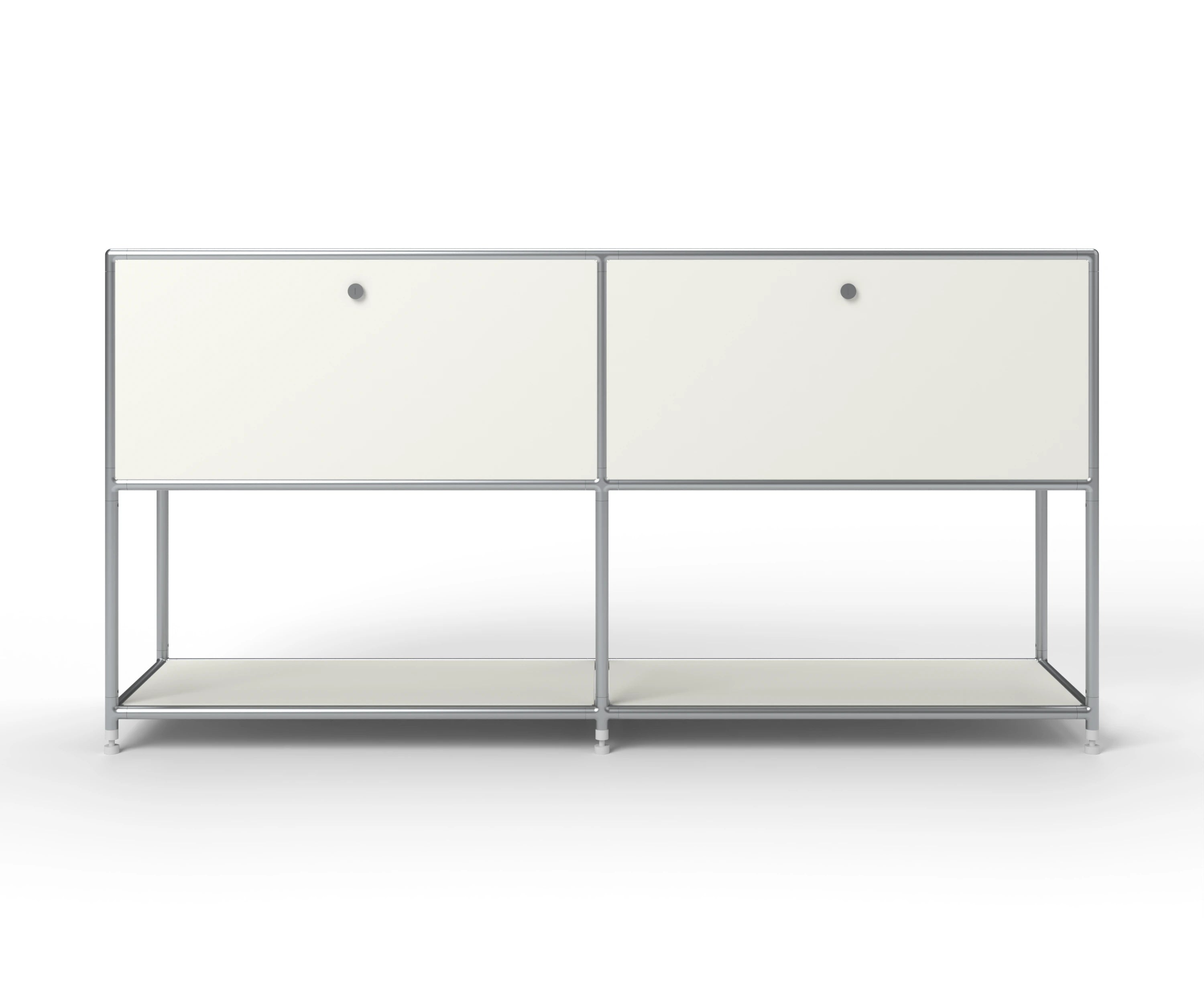
Foundation Living cabinet layouts include enclosed storage above an open lower section, as well as an open upper section with enclosed storage below.
Before comparing them, list a few things you plan to store and picture where each would go.
| What you need | What to compare |
|---|---|
| Direct access to everyday items | Open shelf position, usable dimensions, and reach |
| A place to display books, records, or a collection | Visibility, arrangement space, and ease of cleaning |
| A home for loose items | Interior organization, usable dimensions, and how easily you can find things |
| Storage near a bed, table, or corner | Opening clearance and where you’ll stand to reach inside |
| Both visible and concealed storage | Whether the balance matches the belongings you have |
Check each product separately for exterior dimensions, usable interior space, and opening details. Appearance and compartment count alone won’t tell you its storage capacity.
Compare the position of open storage
Product layout references • not shown at the same scale

- T4: enclosed above / open below
- T1: open above / enclosed below
Sort a few belongings before choosing
Gather the things you plan to put in the cabinet and sort them into a few groups:
- Everyday items: Notice where you reach for them and where you naturally put them back.
- Things you want to see: Choose the objects you actually want in view and try arranging them.
- Things you want to put away: Group them by purpose and consider the interior space they need.
- Occasional items: Check their dimensions and decide whether they need the easiest-to-reach position.
This can make the decision more specific. You may find that one open shelf is enough, or that more of your everyday belongings need direct access than you expected.
Let the layout follow what you have and how you use it.
Measure the whole storage bin
Include handles, lid and projections • method illustration
- Full exterior width
- Full exterior depth and height
- Cabinet opening and interior
- Space to pull out and lift
Frequently asked questions
Do open shelves always look cluttered?
No. The number, shape, and arrangement of objects all affect how a shelf looks. Start by giving everyday belongings a place, then decide whether a tray or bin would help group smaller items. Leaving some space open can also make reaching and cleaning easier.
Do cabinets with doors require less organizing?
Doors keep contents out of sight, so the interior doesn’t need to stay arranged for display. It should still be easy to find and put away your belongings. If items regularly go missing or you need to move several things each time, reconsider the interior arrangement.
Should I measure the cabinet interior if I plan to use storage bins?
Yes. Compare the bin’s full exterior dimensions, including its lid, handles, and projecting parts, with the cabinet’s usable space. Check that it can pass through the opening and that you have room to pull it out, lift it, or open the lid.
At Foundation Living, we believe clear layouts and product details help you make your own choices.
What stays in view and what goes behind a door can take shape around your everyday life.
Explore Foundation Living cabinet layouts and find a balance of open and closed storage that suits your belongings.
Compare the actual storage layouts
The White Sideboard with Open Bottom Shelf combines enclosed upper storage with a lower open shelf. The Black Sideboard with Four Doors and Open Upper Shelf puts open storage above the doors. For a fully open option, compare the MO01 product specifications and module quantity. MO01 is sold as an individual module. Magnetic fittings affect the assembled height, so check a stacked arrangement using its finished configuration dimensions rather than a simple multiple of the module body height. Follow the corresponding MO01 product description for exact measurements and their measurement basis, and check the clear opening and usable space for your belongings. If you plan to join or stack modules, confirm the fixing and installation method for your arrangement.
For room layout, read balancing storage and display on a living room wall.