How to Balance Storage and Display on a Living Room Wall
Give everyday items a place to return to and favorite objects room to be seen. Explore three cabinet layouts for balancing storage and display on a living room wall.
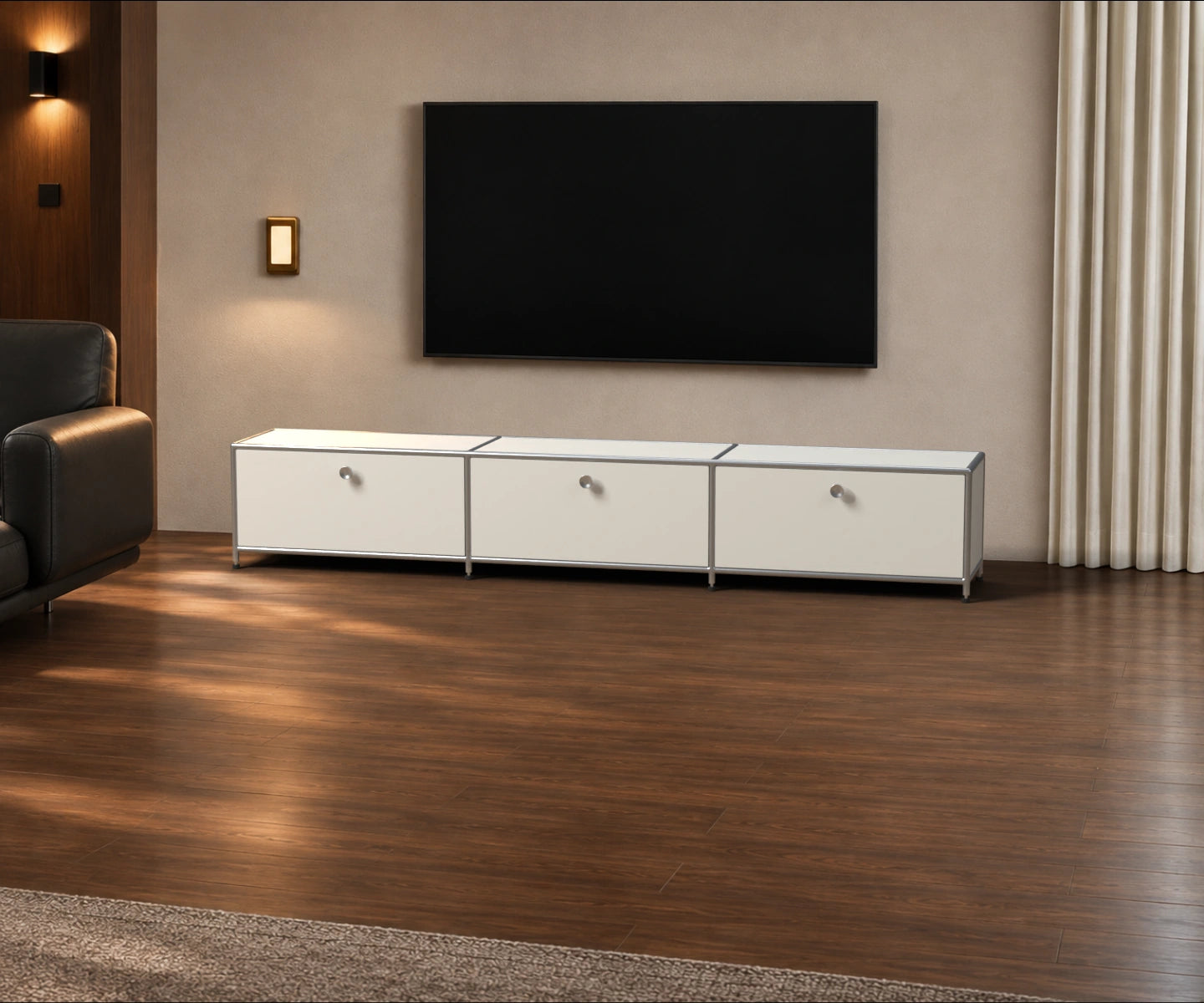
Cover image: AI-generated scene illustration.
Start by separating the things you want to put away from the things you want to see. Then use the wall dimensions, nearby furniture, and your daily routines to plan enclosed storage, open shelves, and surface space. The amount of storage and display can follow the belongings you already have.
Remotes, charging cables, and the book you’re reading need somewhere convenient to return to. A photograph or something brought home from a trip may simply deserve a place where you can see it.
They can share the same wall.
At Foundation Living, we want storage to support everyday use and display to leave room for personal choices. Start with what you want to keep, then consider how furniture could fit into that spot.
1. Start with your belongings
Your actual belongings provide a useful starting point for deciding how much enclosed storage and display space you need.
List the things you want to keep here, or gather them together.
| Type of belonging | What to consider |
|---|---|
| Remotes, charging accessories, and small items | A place where they are easy to find and put back |
| Frequently read books and everyday trays | An accessible open position |
| Photographs, collections, and favorite objects | Their dimensions and how you want to view them |
| Documents and extra supplies | Suitable enclosed space and organization |
| Speakers or other equipment | Dimensions, load limits, power, and operating requirements |
Choose a few things you most want to see. Other objects can go inside the cabinet, stay elsewhere, or rotate into the display later.
If there is a lot to put away, check enclosed capacity first. If books and collections are the priority, compare the position and usable dimensions of the open sections.
2. Measure the wall and notice how people move
Assess usable wall space alongside doors, windows, outlets, neighboring furniture, and walking routes.
Measure the available width, then consider how far a cabinet would project into the room.
Where does the room door swing? Where do curtains hang? Is there a route beside the sofa that needs to stay clear? Where will you stand when a cabinet door or drawer is open?
These details help narrow the possible positions.
Mark the cabinet footprint with removable tape suitable for your floor, then mark its height on the wall. Look from the sofa, the room’s entrance, and the routes you use regularly.
Check outlets and cords, too. If you plan to add a lamp or equipment, confirm power access and the relevant ventilation and operating requirements before settling on the arrangement.
3. Compare three furniture layouts
Option one: a low cabinet with art or photographs above
If you mainly need to put away loose items and want some wall space for display, consider a low cabinet with enclosed storage.
Organize the interior by purpose, choose a few objects for the top, and consider artwork or photographs above.
Position the cabinet first, then judge the artwork’s placement. The relationship may look different when seated on the sofa and standing at the entrance. Paper templates or removable marks can help you try frame sizes and positions.
You don’t need to decide on everything at once. Once the cabinet is installed and everyday items have a place, the display can develop gradually.
Option two: open and enclosed sections in one cabinet
If you have things to display and things to put away, compare layouts combining open shelves with doors.
Open sections might hold books, records, or a collection. Enclosed sections can group accessories and extra supplies.
Notice the shelf height. Frequently used belongings should be within comfortable reach. For objects mainly intended for display, look at them from the positions where you usually sit or stand.
The same number of compartments can work differently depending on their arrangement. Compare each item with the usable compartment dimensions rather than relying only on a room photograph.
Option three: a low cabinet alongside a separate taller piece
If you need more storage and the wall and walking space allow it, consider a low cabinet and a separate taller cabinet.
The taller piece can take on part of the storage, while the area around the low cabinet retains surface and wall space for display. Whether they sit close together or farther apart depends on their dimensions and opening mechanisms.
They can stand separately. Connecting, stacking, or reconfiguring pieces requires explicit support from the relevant product system.
Install and anchor the taller piece according to its instructions, and keep everyday belongings on accessible shelves.



4. Begin the display with something you want to see
Start with a picture, an object, or a collection, then adjust what goes around it.
Decide where it belongs, where you will view it from, and whether it is easy to reach and clean.
A vase can have space beside it, or share the surface with a book you often read. If a lamp already occupies part of the top, account for its shade, cord, and use requirements.
Try the arrangement in place. Can you lift one object without disturbing the others? How much would you need to move to wipe the surface?
The objects don’t all need matching colors. Their sizes, positions, or a shared memory can give them a relationship. At home, a display can begin with the things you enjoy seeing repeatedly.
Before adding wall-mounted shelves or artwork, confirm the wall construction, mounting method, appropriate fixings, and load requirements.
5. Give everyday items an easy place to return to
A wall arrangement works for storage and display when putting things away fits naturally into your routine.
If you use a remote on the sofa each day, give it a place along that familiar reach or route. Group charging accessories so you don’t have to search behind several doors.
Extra supplies may not need the easiest-to-reach shelf. Check whether display objects obstruct doors, cover handles, or occupy a surface you regularly need for setting things down.
Use the arrangement for a few days. If an item repeatedly ends up elsewhere, notice what makes that location more convenient and consider moving its storage there.
The relationship between furniture and belongings can keep changing through use.
Check the layout against the product details
| What to check | What to confirm |
|---|---|
| Wall space and footprint | Available width, cabinet depth, nearby furniture, and walking space |
| Enclosed storage | Item dimensions, usable interior space, organization, and opening clearance |
| Open display | Usable shelf dimensions, viewing position, access, and cleaning |
| Cabinet top | Objects, rated load limits, and any temporary surface space needed |
| Lighting and equipment | Outlets, cords, ventilation, and operating instructions |
| Installation and anchoring | Requirements for the furniture and wall-mounted items |
| Delivery access | Package dimensions, route into the room, and required services |
Foundation Living cabinets offer different arrangements of open and enclosed storage. Picture where your belongings would go, then check the dimensions, construction, and confirmed features of each piece.

Frequently asked questions
Does a living room cabinet need to fill the whole wall?
No. Choose the width around your storage needs and the available space. The remaining area can accommodate movement, a plant, or a later decision. It can also stay open.
Should I choose only open shelves if I have a lot to display?
Compare dimensions, access, and cleaning before deciding how much open space to use. You can display part of a collection, store the rest appropriately, and rotate pieces later. Choose an arrangement you will enjoy using and maintaining.
Do I need wall decor if the cabinet top already holds a lamp and objects?
Try the existing arrangement first and view it from your usual positions. If you want to add art or photographs, mock up their dimensions and placement. You can decide after living with the furniture for a while.
At Foundation Living, we want furniture to hold the things you need to put away and leave a place for the things you enjoy.
A wall arrangement can begin with what you want to keep and gradually become part of your home.
Explore Foundation Living cabinet dimensions and storage layouts, and compare arrangements for your living room.
Compare low, tall and open storage
Compare the Low Profile TV Stand with Three Doors, the Black Storage Cabinet with Three Stacked Doors and the MO01 open storage module by their actual height, footprint and enclosed or open storage. MO01 is sold by individual module. Magnetic fittings affect the assembled height; use the finished dimensions and measurement basis in the product description for your selected configuration rather than multiplying the module body height. Choose the number of individual modules around the space and objects you have; a multi-module gallery arrangement is not the purchase unit. Confirm the supported layout and fixing method before stacking or joining modules. The magnetic shelf and round-frame cabinets are separate products; compatibility is not implied.
If the low cabinet will sit beneath a television, use our guide to measure for a low TV stand. Check the TV’s actual size and support, the cabinet height, and the storage space your equipment needs.
For the access and cleaning trade-offs, read open shelves vs. closed cabinets. If a long cabinet suits the wall, compare the Long Black Sideboard and Extra Long Black Sideboard with the sideboard size guide.