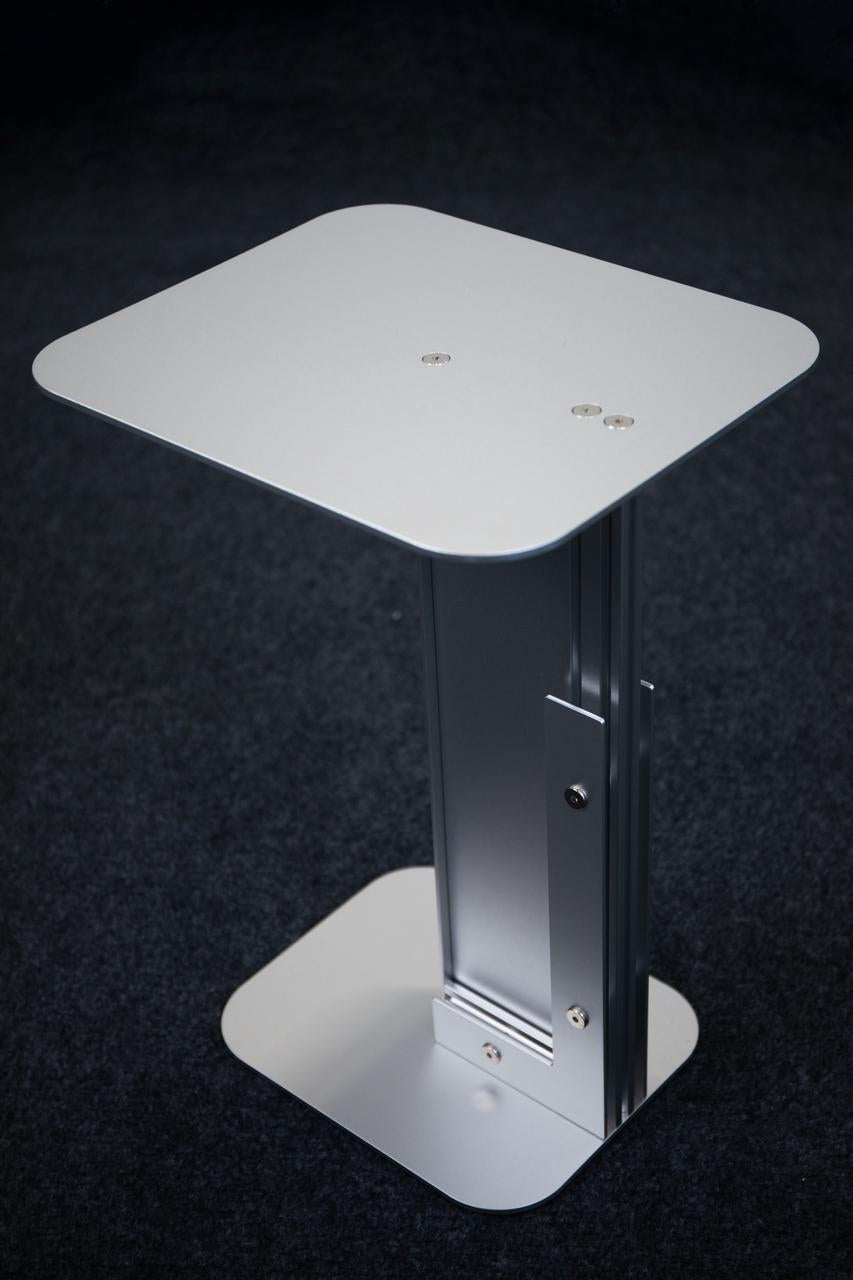
Starting with the Connector: Notes on Developing a Furniture System
A development note on Foundation Living’s round-tube connector: why the connection matters, what the recorded tooling stage establishes, and the questions that need testing next.
Connector details
A closer look at the corner, joints and surface finish.

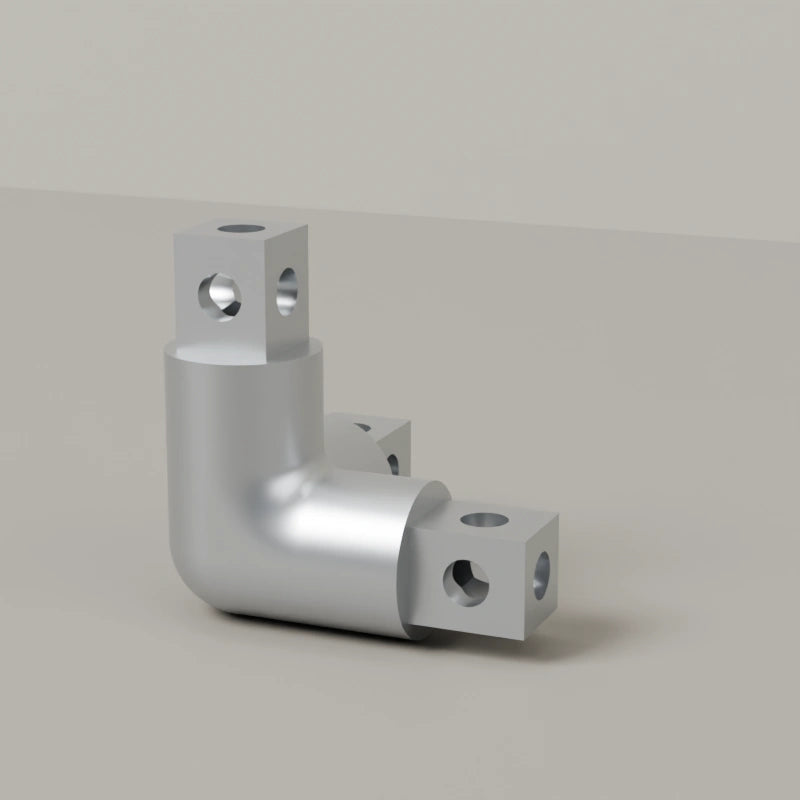
Cover image: Existing CAD design reference; not a manufactured sample or test result.
Foundation Living’s furniture system development centers on round-tube connectors and component configurations. A development record dated October 19, 2026, noted that the connector had entered the tooling stage. Supported configurations, compatibility, load limits, and assembly requirements still need to be established through prototype and configuration testing.
A connector occupies a small part of a cabinet.
People may notice the color, panels, and overall proportions first, seeing the connections only when they move closer. But when we consider taking furniture apart, adjusting it, or using existing components in another arrangement, many questions lead back to that connection.
This entry begins there.
1. Describe the changes we want to make possible
Foundation Living wants to leave part of furniture planning to the people who live with it. Bringing that idea into a product starts with a question: which changes do we want to support?
Could storage grow as a book collection expands? Could existing components take part in a different layout after a move? Could the balance of open and enclosed space change?
These questions guide development. They need to become clearly defined structures and configurations.
Making a cabinet wider may require different framing and connections. Adding height calls for another assessment of stability and anchoring. A new use requires checks of dimensions, loading, and operating conditions.
We want to work through those questions before describing which choices can be offered to the user.
2. The recorded milestone: entering the tooling stage
The brand and product record dated October 19, 2026, noted that the round-tube connector had entered the tooling stage.
That is a specific development milestone. It also leaves questions for the work ahead: how will the manufactured component fit with its matching parts? Which complete furniture configurations can it support? What will need to change?
Moving forward from this stage requires checking the design through samples and complete pieces.
A tooling milestone alone does not establish that every proposed configuration works. Load capacity, stability, and repeated assembly each need their own evidence. This entry uses that recorded stage as its starting point and sets out the questions that follow.
Development milestone
Recorded progress and work that still needs verification
- 19 OCT 2026
- RECORDED / TO VERIFY
- Defined parts
- Defined conditions
- 19 OCT 2026: tooling entry recorded
- Next: manufactured sample checks
- Next: assembly and configuration
- Next: supported capability evidence
3. Connection details also shape the appearance
We care about how a connector works and how it appears within the furniture.
How much of the connection remains visible, how a tube meets a panel, and how the node’s proportions and finish affect the whole piece are all design considerations.
Foundation Living wants construction to be understandable. Looking closely at a piece should help someone see the relationship between its panels, frame, and connections.
Those choices need to be considered alongside manufacturing and assembly. Can the intended proportions be produced? How is the component installed? Where does the tool enter? Could the surface be damaged during the process?
We want the details that remain to express a clear design preference and respond to practical use.
Connector details
A closer look at the corner, joints and surface finish.
4. Turn the next checks into specific questions
A system’s supported capabilities need to be described through defined components, configurations, and verification results.
Connector development needs to continue within complete furniture.
| What needs to be established | Questions to answer |
|---|---|
| Component fit | Which tubes, panels, and other parts work with the connector? How are dimensions and versions identified? |
| Connections and overall stability | Does the assembled configuration meet the requirements for its intended use? |
| Loads and support | Under what conditions can the top, shelves, and connections be used? What limits and evidence are needed? |
| Assembly | Who performs the work, which tools are required, and which steps need professional involvement? |
| Disassembly and reassembly | Is repeated operation supported? If so, under which conditions and inspection requirements? |
| Maintenance and replacement | Which components can be handled separately, and which parts, tools, or services are needed? |
These checks need actual records. Methods, conditions, and results should correspond to real samples and configurations rather than being reduced to a general claim such as “strong” or “reconfigurable.”
A connection also needs to be assessed as part of the complete piece across the sizes and layouts being considered.
Verification planning
Blank planning reference • no passed tests or certification
- DEVELOPMENT
- RECORDED / TO VERIFY
- Defined parts
- Defined conditions
- Component fit and versions
- Stability and load conditions
- Assembly and repeated operation
- Maintenance and replacement
5. From a component to a configuration people can understand
When choosing furniture, people need to know what they are buying, how it can be used, and what a later adjustment would involve.
Development therefore also needs clear configuration information.
A configuration should identify its components, which parts can remain in use, what a change would require, and the installation and operating conditions that apply afterward.
If a change between configurations becomes supported, we want to explain it specifically: what stays, what is added, who performs the work, and how the cost is made up.
People interested in the construction can explore further. People who want to choose a complete piece should also be able to understand what it includes.
How much someone participates can remain their choice. Resolving the professional questions is the brand’s responsibility.
Document the configuration
Development worksheet • not a purchasable kit
- DEVELOPMENT
- RECORDED / TO VERIFY
- Defined parts
- Defined conditions
- Included components and versions
- Proposed retained parts
- Additional parts and service
- Installation and operating conditions
6. Consider how existing components might remain useful
When developing a new component, we consider the need it could meet and its relationship with existing parts.
Would it require a new connection interface? Which dimensions could be shared? How might a later revision affect someone who already owns a piece?
These questions influence expansion, maintenance, supply, and price. Beyond the initial purchase, the potential costs of parts, changes, and service deserve consideration.
Whether shared components and processes create efficiencies needs to be checked against actual manufacturing and cost information. We want the possibility of continued use to rest on specific, workable conditions.
7. Keep ideas, progress, and confirmed capabilities distinct
Development can produce drawings, concept scenes, samples, and records of configuration testing.
Each answers different questions.
A drawing describes an intended design. A sample helps check physical fit. Configuration testing needs to establish what is supported under the stated conditions. A scene can help communicate an idea without proving that the arrangement is ready to deliver.
We want subsequent entries to make those stages clear. Progress, revisions, and confirmed capabilities should each be tied to the relevant information.
Foundation Living’s connector and modular system remain in development and testing. Current product configurations and functions should be checked against the corresponding product information. Compatibility with other brands, stacking, and changes of use each require their own supporting evidence.
Starting with a connector, we want to explore how furniture can meet a need today while keeping some possibilities open for later arrangements.
That idea needs to take shape through components, samples, and complete configurations. As each capability is confirmed, we want to explain it clearly and continue the work.
Learn about Foundation Living’s design approach and explore current product dimensions, layouts, and confirmed features.