Choosing a Cabinet for Your Dining Room, Entryway, or Living Room
Start with the job you need a cabinet to do. Compare dining room, entryway, and living room storage around your belongings, available space, and everyday movements.


Cover image: AI-generated scene illustration.
For a dining room cabinet, prioritize dish dimensions, access during meals, and space for chairs and cabinet doors. For an entryway cabinet, check the route in and out, where everyday belongings go, and nearby door swings. For living room storage, consider capacity, display needs, seating, and equipment. Start with the purpose, then compare dimensions, layout, materials, and installation requirements.
A piece of furniture often has a name before it reaches your home.
Sideboard, entryway cabinet, living room storage cabinet. These names help us find different options. At home, the belongings inside, nearby furniture, and people passing through also shape how a piece gets used.
At Foundation Living, we want those names to help you choose while leaving room for your own arrangements. Start with the job you want the cabinet to do.
1. Identify the main need in each location
Storage needs can differ by room, especially in how you reach for things, put them away, and move around the furniture.
List what you plan to keep there.
| Location | Typical belongings | What to compare first |
|---|---|---|
| Dining room | Dishes, trays, cups, and table supplies | Interior dimensions, load limits, access, and chair movement |
| Entryway | Keys, accessories, bags, or shoes | Entry and exit routes, surface use, openings, and ease of putting things away |
| Living room | Books, documents, collections, accessories, or equipment | Open and enclosed space, capacity, viewing and reaching positions, and equipment requirements |
Use this as a starting point, then make a list for your home.
If you aren’t sure what needs storage, observe the room for a few days. What stays on the dining table? Where do you put things when you come through the door? What is difficult to put away in the living room?
Those habits can make the need more specific.
2. Choosing a dining room cabinet
Judge a sideboard or buffet cabinet through preparing a meal, moving around the table, and putting things away afterward.
Measure the plates, trays, and cups you plan to store. Compare them with the usable interior dimensions, openings, and shelf load limits. Exterior depth won’t tell you whether a plate fits inside.
If you often take cups or napkins from the cabinet, check the route from the table. Would you need to walk around it? Could an open cabinet door hit a chair?
The top can have a purpose of its own. You might want somewhere to set down dishes or keep tea and coffee supplies together. Arrange your usual items to see how much space you need to reach and work.
For small appliances, check surface load limits, power access, ventilation, and the appliance’s operating requirements separately.
When assessing the footprint, pull out the dining chairs as you would to sit down and stand up. Then try walking past. The space beside tucked-in chairs won’t represent every stage of a meal.

3. Choosing an entryway cabinet
Preserve the door swing and the route in and out before arranging storage for everyday belongings.
Open the entrance door and any nearby doors to see the areas they use. Try coming in with shopping bags or a shoulder bag, turning, and closing the door.
Keys, an access card, or earbuds can have an easy-to-find place. If a small tray is all you need for them, compare that tray with the usable cabinet surface.
For bags, account for their full dimensions and how you lift them in and out. For shoes, confirm that the cabinet is suitable for that use, then check interior dimensions, shelf positions, and cleaning requirements. “Entryway” describes a location; it does not establish that a piece is designed as shoe storage.
Consider moisture brought in on rainy days, too. Wet umbrellas, shoes, and other belongings may need separate containers or arrangements suited to the cabinet’s materials and care instructions.
The entryway cabinet doesn’t need to hold everything in the home. Begin with what you actually use when arriving and leaving.
4. Choosing a living room storage cabinet
Start with the capacity you need, then decide how to divide enclosed storage, open display, and the top surface.
Group documents, charging accessories, and extra supplies by purpose. For frequently read books, records, or collections, compare open shelf positions and usable dimensions.
If you have many things to display, you can begin with a selection. Leave room to reach and clean, then rotate objects later.
Look from the sofa and from the room’s entrance. The cabinet’s proportions, displayed belongings, and lighting may feel different from those positions.
If you want to place a TV, speakers, or other equipment on or inside the cabinet, check load limits, equipment support dimensions, cable routing, and ventilation separately. A cabinet being wide enough does not establish that it is suitable for a particular device.
Consider the placement alongside the coffee table, sofa, and walking routes. Mock up whether you can comfortably reach inside with doors or drawers open.
5. Can the same cabinet work in another room?
You can consider another use, but reassess the dimensions, construction, load limits, and conditions in the new location.
A piece listed as a sideboard may suit living room storage if its dimensions and layout meet those needs. In an entryway, it needs another check against door movement, access, and the belongings you plan to store.
Work through these questions:
1. Does it fit? Check exterior dimensions, space behind the cabinet, neighboring furniture, and routes through the room.
2. Will the belongings fit? Check usable interior dimensions, openings, and compartments.
3. Is it convenient? Consider height, reaching movements, and door or drawer operation.
4. Does it meet the requirements? Confirm loads, installation, anchoring, care, and any equipment conditions.
Use the same checks for furniture you already own. A change of contents or position may meet a new need. You can try that arrangement before deciding whether to add another piece.
Recheck before changing rooms
Planning worksheet • not unrestricted conversion
- Room fit and movement
- Usable storage and belongings
- Everyday access and openings
- Loads, installation and anchoring
6. Compare specific products using the same questions
Place different cabinets under the same use conditions to make the comparison clearer.
| Comparison item | What to confirm |
|---|---|
| Exterior dimensions | Width, depth, height, projecting parts, and the installed footprint |
| Interior space | Clear compartment dimensions, openings, and any supported shelf adjustments |
| Storage layout | Where open shelves, doors, and drawers are positioned |
| Opening mechanism | Direction, clearance, and where you will stand to reach inside |
| Load limits and uses | Requirements for the top, shelves, and moving components |
| Materials and care | Component materials, finishes, and suitable cleaning methods |
| Delivery and installation | Packages, access route, assembly, and anchoring |
| Price and service | Included items, delivery, installation, returns, and warranty terms |
Foundation Living cabinets have different dimensions and arrangements of open and enclosed storage. Begin with a particular location, picture your belongings and daily movements there, then review the confirmed information for the corresponding product.
Frequently asked questions
Should I choose the shallowest cabinet for a narrow entryway?
A shallow cabinet is worth comparing, but check that your belongings fit. Also assess door swings, cabinet openings, installation, and the actual route through the space. Less depth can reduce the footprint without resolving every layout question.
Should dining room and living room cabinets come from the same collection?
Choose around your preferences. One collection may help carry colors and construction details between rooms, while different materials or styles can also work together. First check each piece’s dimensions and use, then consider their relationship across the space.
Can an entryway cabinet double as a shoe-changing bench?
Only use it for seating when the product explicitly supports that purpose and provides the relevant load, construction, and installation requirements. A convenient height or a surface intended to hold objects does not establish that it can support a seated person.
At Foundation Living, we want clear dimensions, construction details, and use information to help you find a suitable piece through a familiar furniture name.
Where it goes and what it holds can take shape around the everyday life of your home.
Explore Foundation Living cabinet dimensions, storage layouts, and confirmed features as you plan for your dining room, entryway, or living room.
Compare the pieces for each room
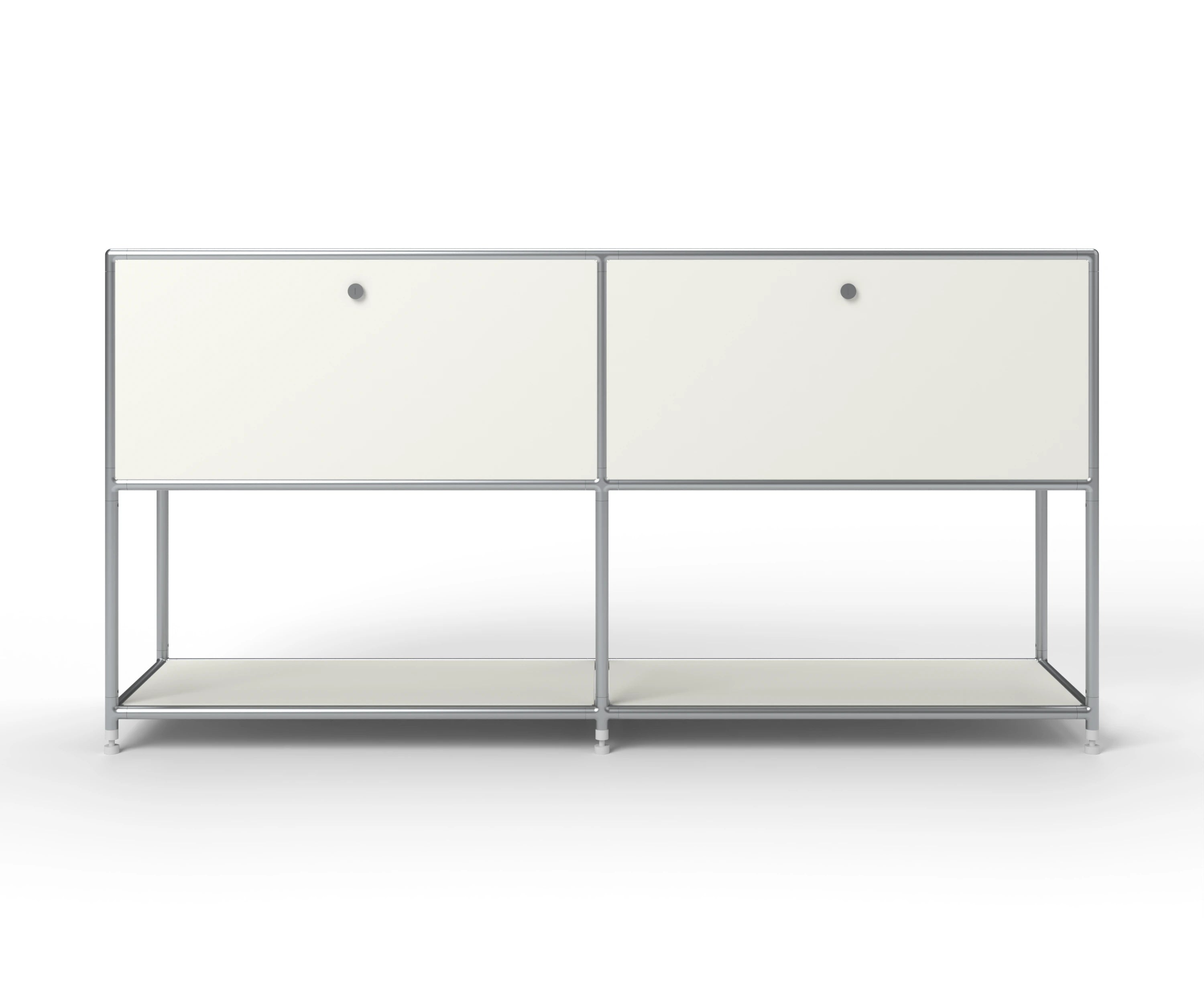
For dining storage, compare the White Sideboard with Open Bottom Shelf with the Black Sideboard with Four Doors and Open Upper Shelf. For a taller cabinet, check the Black Storage Cabinet with Three Stacked Doors. For a low horizontal piece in a living room, see the Low Profile TV Stand with Three Doors. Confirm each footprint and delivery route rather than treating these pieces as interchangeable.
Choosing a cabinet for a TV wall? Our TV stand width and height guide explains which room, television and storage measurements to compare before selecting a low cabinet.
Use the sideboard measuring guide to check dimensions, then read about balancing storage and display on a living room wall.