How to Choose the Right Nightstand Height and Width
Start with your mattress height and the things you keep within reach. This guide helps you measure bedside space and compare nightstand sizes around your daily habits.

Cover image: AI-generated scene illustration.
To choose a nightstand height, measure from the floor to the top of your mattress, then check how comfortably you can reach the surface while sitting and lying in bed. To choose the width, measure the usable bedside space and allow for your everyday items, cabinet openings, and the path you use to get in and out of bed.
The glasses you take off before sleep. A book with a page marked. The alarm you reach for in the morning. What you need beside the bed often comes down to these small things.
At Foundation Living, we like furniture dimensions to begin with everyday use. You might want room for a lamp, or just a place for your phone and a glass of water. Start with your habits, then see what fits beside your bed.
1. How tall should a nightstand be?
A surface close to the top of your mattress is a useful starting point. Check the height against the way you actually reach for things before choosing.
Measure from the floor to the top of your mattress as you normally use it, including a mattress topper if you have one. Bed frame height or mattress thickness alone won’t give you the finished sleeping height.
Next, try your usual movements. Sit on the edge of the bed and set down your phone. Lean against your pillows and reach for a book. Lie down and reach toward the spot where you would leave your glasses.
Notice whether you need to lift your arm awkwardly, reach far downward, or shift your body toward the edge of the bed.
For example, if the top of your mattress is 24 inches above the floor, a nightstand approximately 23.66 inches tall would sit about 0.34 inches below it. That difference helps you compare positions; your bed frame, pillows, and posture will still affect how it feels.
If you have a stable piece of furniture at a similar height, try placing a few everyday items on it. A mark on the wall helps you picture the height, while reaching for an actual object helps you judge it.
Example height comparison
Mattress top: 24 in above the floor. Current nightstand height: 23.66 in (60.1 cm). Difference: approximately 0.34 in, with the nightstand below the mattress top.
2. How wide should a nightstand be?
Choose the width using the actual clear space beside your bed, while accounting for installation, doors or drawers, and everyday movement.
First, find the bed’s outer edge. Some frames extend beyond the mattress, and some upholstered headboards are wider than the bed itself. Check for obstructions at the height and position where the nightstand will sit.
Measure from the bed’s outermost obstruction to the wall, dresser, or other boundary. Then check nearby room doors, closet doors, curtains, and outlets.
For example, within a 24-inch-wide bedside space:
| Approximate nightstand width | Approximate total width remaining |
|---|---|
| 20.7 inches | 3.3 inches |
| 14.8 inches | 9.2 inches |
These figures describe the width left over. They don’t establish that installation or operating clearances are sufficient. Check the product’s requirements, projecting parts, and the actual conditions beside your bed.
Mark both footprints on the floor with removable tape suitable for the surface. Compare the arrangements: would you rather have more tabletop space, or leave a larger gap beside the cabinet?
Check the usable bedside width
Example footprints • remaining width is not an installation standard
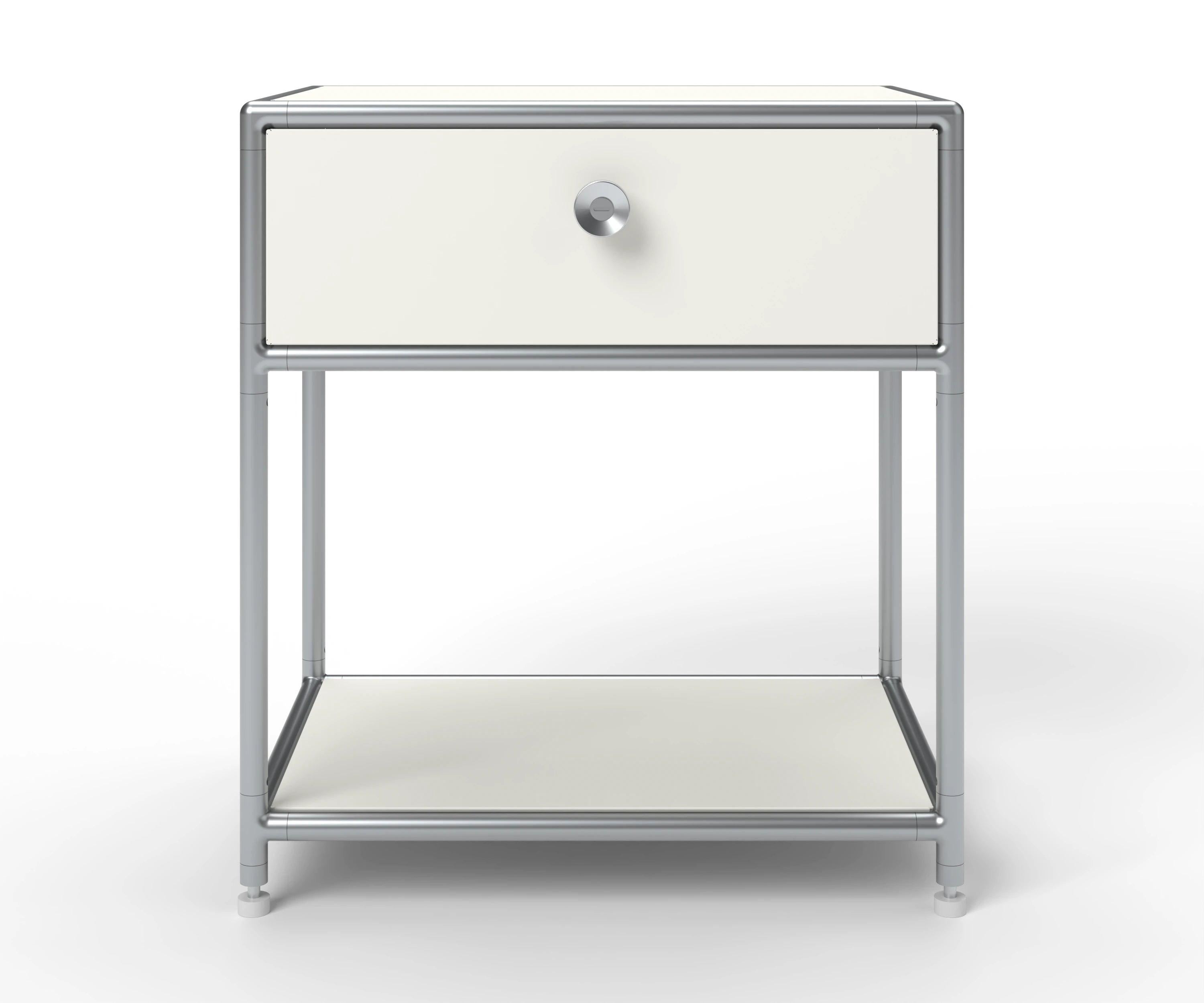
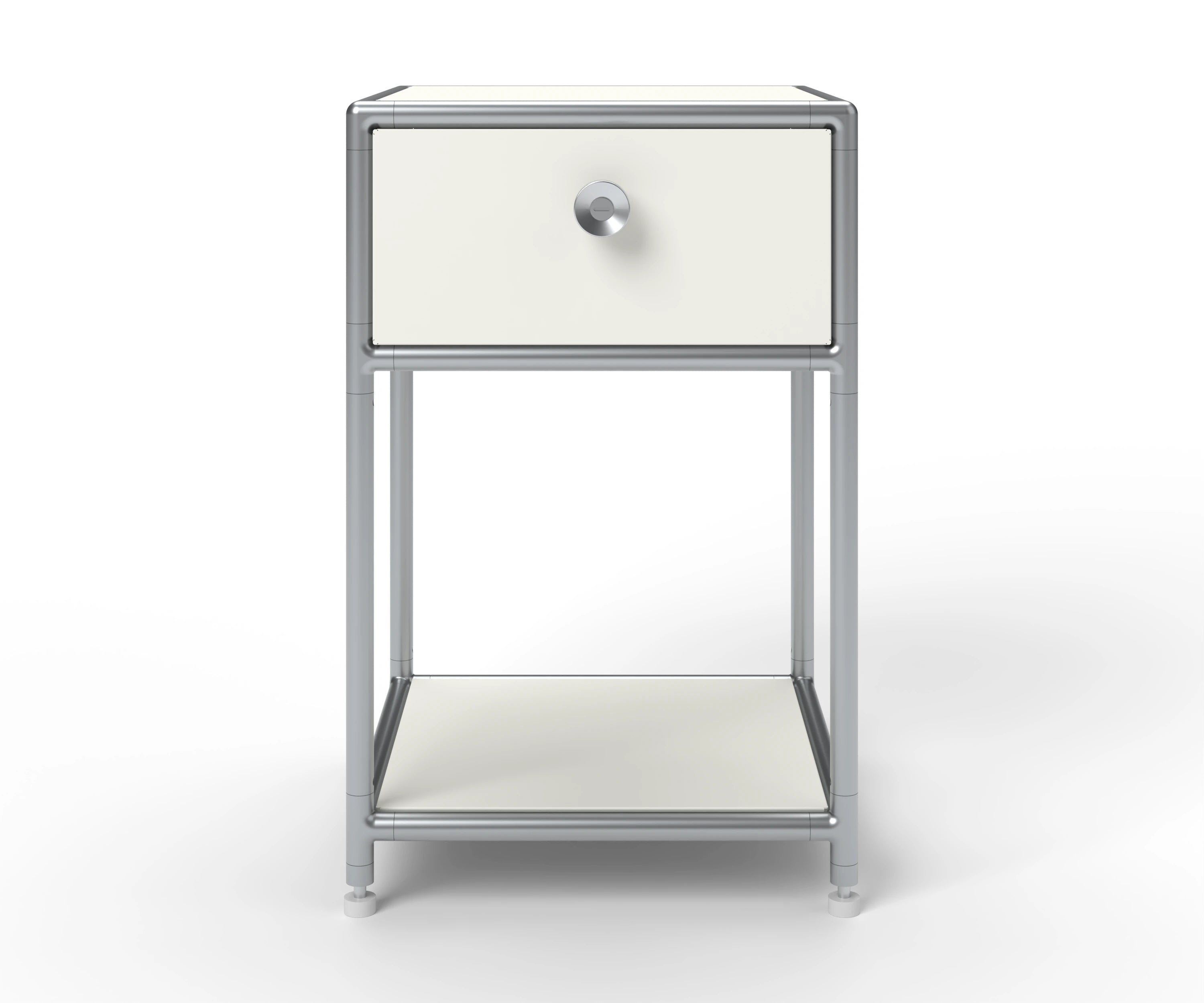
- BED
- WIDE 20.7 in
- NARROW 14.8 in
- 24 in example gap
- Wide: 3.3 in • narrow: 9.2 in remaining
- Both model depths: approximately 15.3 in
3. Do you need a wider or narrower nightstand?
Start by arranging the things you want to keep on top, then measure the space they occupy.
Set out your lamp, phone, glasses, book, or water glass in the positions you would normally use.
For a lamp, consider both its base and any lampshade that extends beyond it. If you use a charging stand or dock, measure the whole setup.
Try picking up one item without disturbing the others. This can reveal whether the arrangement feels comfortable or crowded.
A narrow nightstand may provide everything you need. If you like a lamp, reading materials, and a drink within reach, a wider surface may be easier to arrange. Choose around those belongings rather than filling every available inch beside the bed.
Plan your bedside surface
Arrange your actual belongings • not to scale
- Lamp base and shade
- Phone and charging cable
- Book and reading glasses
- Space to lift each item
4. Check the depth and position, too
Nightstand depth, front-to-back placement, and distance from the bed work together to affect reach and access.
A cabinet that projects too far alongside the bed may interfere with getting up. One placed too far back may leave everyday items difficult to reach.
Mark the complete footprint on the floor. Sit on the edge of the bed, put your feet down, stand up, and walk toward the bedroom door or closet.
Check where charging cords will run and whether plugs require space behind the cabinet.
If the bed frame projects outward or bedding hangs alongside the nightstand, check the arrangement as you normally use it. Walk the route you take each morning before deciding on the footprint.
5. Check storage and opening space
Exterior dimensions tell you how much room the nightstand occupies. Interior dimensions and opening clearances tell you what fits inside and how easily you can reach it.
Measure any books, charging accessories, or other items you want to put away, then compare them with the usable interior dimensions.
For a drawer, check whether it can open without hitting the bed frame and whether you can stand in front of it to reach inside. For a cabinet door, confirm its opening direction and range.
For an open shelf, check the usable height and depth, along with room to lift items out.
If these details aren’t listed, ask before ordering. A photo of a closed cabinet won’t show the full space needed to use it.
Compare two nightstand widths
Two Foundation Living white nightstands have the following exterior dimensions:
| Option | Approximate width × depth × height | Dimensions in centimeters |
|---|---|---|
| Wider option | 20.7″ W × 15.3″ D × 23.66″ H | 52.55 × 38.815 × 60.1 cm |
| Narrower option | 14.8″ W × 15.3″ D × 23.66″ H | 37.55 × 38.815 × 60.1 cm |
Inch measurements are rounded conversions of the centimeter dimensions.
Both have the same height and depth. Their widths differ by 15 cm, or approximately 5.9 inches. Both have an open lower shelf. The wider model has enclosed upper storage, while the narrower model has one upper drawer. Check each model’s actual opening mechanism and interior dimensions separately.
These dimensions describe the current model in its closed state, including feet, handles, and other projecting parts. Check usable interior dimensions, installation gaps, and opening space separately.
Mark the two footprints on the floor and the height on the wall. Check their relationship to your mattress, try getting in and out of bed, and compare the space needed for your tabletop items.
This helps you judge overall size. Check each product’s information separately for its storage layout, opening mechanism, and installation requirements.
Current exterior dimensions: width × depth × height
Wider: 52.55 × 38.815 × 60.1 cm (20.69 × 15.28 × 23.66 in). Narrower: 37.55 × 38.815 × 60.1 cm (14.78 × 15.28 × 23.66 in).
Your nightstand measuring checklist
| Measurement or detail | Your notes |
|---|---|
| Floor-to-mattress-top height | ______ in. |
| Usable clear width beside the bed | ______ in. |
| Surface space needed for everyday items | ______ |
| Expected installed depth | ______ in. |
| Projecting bed frame or headboard sections | ______ |
| Door or drawer opening clearance | ______ |
| Outlet, plug, and charging cord positions | ______ |
| Interior dimensions and installation requirements | ______ |
Frequently asked questions
Should a nightstand be the same height as the mattress?
It doesn’t need to match exactly. A height close to the mattress top is a useful place to start. Check your reach while sitting and lying in bed, since the frame, pillows, and your habits will affect what feels comfortable.
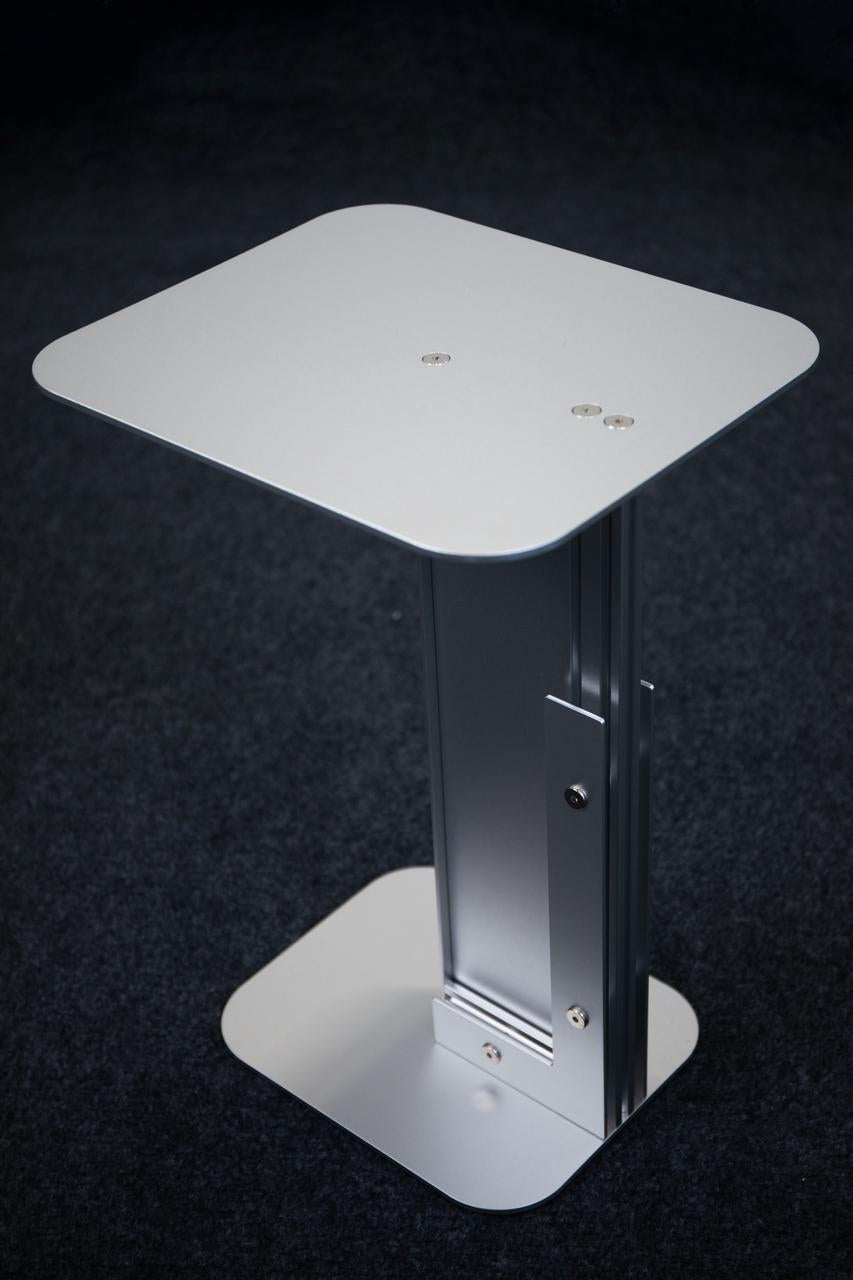
If your bed is low, or you only need a small surface within reach, a C-shaped side table is another option. The S01 comes in fixed heights of 19.69 in (50 cm) and 21.65 in (55 cm), so compare those with your own mattress height first.
Do both nightstands need to be the same width?
You can choose them separately. Available space, lighting, and storage needs may differ on each side. Measure both sides before deciding whether matching pieces make sense. You can also use a nightstand on just one side if that suits your room.
Should a small bedroom always have the narrowest nightstand?
First, check that your essential items fit, then check movement and opening space. If a narrow nightstand meets those needs, it can leave more room beside the bed. If the surface feels crowded, consider a different lighting arrangement or which items you want to keep there.
At Foundation Living, we believe clear dimensions and product details help you make your own choices.
What stays beside your bed, and how much space you leave open, can begin with the way you settle in at night and start your morning.
Explore Foundation Living nightstands and compare dimensions and storage layouts.
Check dimensions on the current product pages
Compare the wider White Nightstand with Open Bottom Shelf, the narrower White Nightstand with Drawer and Open Shelf, and the Bedside Cabinet with Door and Open Upper Shelf. To compare the first two around a tight bedside layout, read wide vs. narrow nightstands.